It’s Not the “Alienation Industry.”

It’s the Untrained Professionals Working In It.
I want to talk about the “alienation industry.”
I hear this phrase regularly in parent support groups, family court reform circles, and from targeted parents who have spent years — and significant money — working with professionals who didn’t help them. Sometimes professionals who made things measurably worse. The frustration is real, and it is earned.
But I want to offer a different frame. Because I believe the phrase “alienation industry” misdirects the critique in a way that ultimately harms the very families it’s meant to protect.
The Analogy Nobody Challenges
When someone is diagnosed with cancer, they enter the world of oncology. We do not call this the “cancer industry” and question whether oncologists should exist. We ask whether the oncologist treating our family member is qualified, experienced, and appropriately specialized for this particular cancer.
When someone develops heart disease, they see a cardiologist. When they need a hip replacement, they go to an orthopedic surgeon. In every serious medical situation, we assume — and demand — that the professional treating that condition has developed genuine, deep specialization in it. We do not question whether medical specialization should exist. We question whether the specific professional in front of us has earned the right to practice it.
So why — when it comes to parental alienation — do we direct our frustration at the field rather than at the qualifications of the individuals working in it?
The problem has never been that professionals work in the parental alienation space. The problem is that too many work in it without the specialized training it demands.
Why Parental Alienation Is Not a General Practice Area
Parental alienation is one of the most complex and counterintuitive dynamics in all of family law and mental health practice. I want to be precise about what I mean by counterintuitive, because this word does a lot of work.
In standard clinical and legal practice, certain instincts are healthy and appropriate. Give the child a voice. Honor their stated preference. Prioritize reducing conflict. Create space for both parents. Wait and see.
In parental alienation cases, every one of those instincts — applied without specialization — can actively complete the alienating parent’s work.
A child who has been overly empowered to reject a targeted parent is not expressing a free preference when they say they don’t want to see that parent. They are performing a loyalty. Honoring that “choice” without examining the conditions under which it was formed is not child-centered practice. It is the final step in the alienation process, carried out by an unwitting professional.

What looks like a defiant child is something else entirely. What presents as a high-conflict co-parenting situation may be a systematic campaign to remove one parent from a child’s life. What appears to be protective parenting may be psychological manipulation. And what feels like therapeutic neutrality may be a failure to recognize — and therefore a silent validation of — a child’s psychological injury.
None of this is visible to a professional who has not done the specialized work to see it.
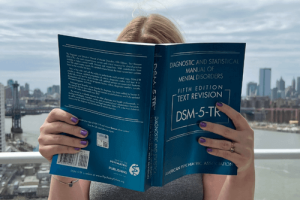
The professional who treats parental alienation after only reading a book on the subject is the equivalent of a physician who wants to treat cancer after only having read a book on oncology. The credential may be real. The specialization is not.
What Genuine Specialization Requires
Working competently in parental alienation cases requires more than a license and a willingness to take the referral. It requires:
- Deep familiarity with the research — including Amy Baker’s 17 Alienating Strategies, the Five-Factor Model of Parental Alienation, and the clinical literature distinguishing alienation from realistic estrangement due to a parent’s bona fide abuse or neglect
- Training in pattern recognition — the ability to identify the behavioral and relational patterns that define alienation across different family presentations, not just in textbook cases
- Experience with the total clinical picture — understanding how alienation manifests across developmental stages, how it presents differently in mild, moderate, and severe cases, and how the child’s symptoms connect to the alienating parent’s specific behaviors
- Fluency with the medical model of assessment — approaching these cases with the same rigor, documentation, and hypothesis-testing that a clinician would bring to any complex diagnostic question
- Direct supervised experience — not conference attendance, not general family therapy training, but hands-on clinical and forensic work with alienated families under qualified supervision
These are not arbitrary standards. They are the baseline for competent practice in one of the most high-stakes areas of family law. Getting it wrong does not just fail the family. It can traumatize a child further, validate a false narrative, and produce court outcomes that take years to undo.
What Targeted Parents Should Ask Before Trusting Any Professional
If you are a targeted parent working with — or considering working with — a therapist, Guardian ad Litem, or custody evaluator, you have both the right and the responsibility to ask direct questions about their qualifications. Here is what to ask:
- What specific training do you have in parental alienation — not high-conflict divorce generally, but parental alienation specifically?
- Where were you trained, and by whom?
- What is your philosophy about identifying and treating parental alienation?
- What is your experience evaluating, assessing, and treating this dynamic?
- Do you understand pattern recognition — and how it applies to identifying alienation in families?
- Do you know what it means to understand the entire clinical picture? Do you work from a medical model of assessment?
These are not trick questions. They are not adversarial. They are the professional equivalent of asking an oncologist about their training before consenting to a treatment plan. Any qualified professional will welcome them. Any professional who cannot answer them clearly and specifically is not yet qualified to work your case — regardless of their credentials, their years in practice, or their confidence in the room.
You deserve answers. Your child deserves answers.
The Real Problem — and the Real Solution
The alienation industry does not need to be dismantled. It needs to be held to a higher standard.
Targeted parents need professional support. They need therapists who understand the overly empowered, rejecting child. They need Guardian ad Litems who can distinguish alienation from realistic estrangement. They need custody evaluators who approach these cases with clinical rigor and genuine expertise. They need expert witnesses who have done the training, logged the hours, and developed the pattern recognition that these cases require.
The answer to bad professional practice is not the absence of professional practice. It is better training, higher standards, and an informed client base that knows what to ask and what to demand.
That is what PACCS — the Professional Alliance for Child Centered Safety — is working to build. And it is what every resource I develop, every class I teach, and every page of my book is designed to support.
Parenting the Alienated Child: Reconnecting With Lost Hearts Loretta Maase, LPC — Charles C Thomas Publisher, 2025 The foundational clinical framework for parenting the overly empowered, alienated child — and for the professionals who work with these families. Available at Charles Thompson Publishers and Amazon. Healing Lost Hearts® classes now forming. Learn More.