When Your Child Rejects You: A Guide to Parenting Through Alienation

You know your child better than anyone—their favorite comfort, what makes them laugh, what helps them feel safe. But when they suddenly reject you—refusing contact, echoing distorted stories, treating you like a stranger—that deep knowing feels powerless. The challenge isn’t understanding what your child needs. It’s knowing how to act when every response seems to backfire.
Thousands of parents face this impossible situation: desperate to reconnect, full of love and good intentions, yet watching traditional parenting approaches fail—or worse, push the distance further.
Why Traditional Advice Often Falls Short
Friends, family, and even some professionals offer familiar suggestions:
- “Give them space—they’ll come around.”
- “Be more fun when you’re together.”
- “Don’t say anything negative about the other parent.”
- “Show unconditional love.”
These work in normal conflicts. But when alienation dynamics are involved—loyalty binds, psychological influence, high-conflict systems—they can unintentionally reinforce rejection: giving space when consistency is needed, competing for affection when boundaries matter, staying silent when gentle reality-testing helps, or pouring love without structure when a child craves stability.
What’s Really Happening
This isn’t typical rebellion or divorce stress. Complete, unjustified rejection of a safe parent is scientifically anomalous. Research (Baker, Miller, Bernet) shows even severely abused children maintain attachment-enhancing behaviors toward abusive parents. When a child severs bonds with a loving one, something deeper—splitting, identification with the aggressor, fear-based compliance—is at play.
Your child isn’t choosing rejection freely. They’re navigating impossible psychological pressures no child should face alone.
The Double-Bind Trap

Every choice feels wrong:
- Pursue contact → “forcing” yourself.
- Give space → “abandoning” them.
- Defend against accusations → “argumentative.”
- Stay silent → accusations become “truth.”
These aren’t solved by trying harder. They require a different framework: grounded in attachment science, developmental psychology, and understanding alienation mechanisms.
What Alienated Children Truly Need
Research and 25+ years of clinical/forensic work show alienated children need parents who see beyond rejection to underlying needs:
- Steady presence when they’re chaotic.
- Distinguishing stated wishes from developmental needs.
- Reality-testing through calm questions, not arguments.
- Modeling the relationship they secretly want but can’t acknowledge.
Calm Authority: The Key Shift
- Move from reaction (arguing, pleading, withdrawing, competing) to purposeful response:
- Maintain boundaries without retaliation.
- Express availability without pressure.
- Respond to hostility with composure.
- Keep children out of adult conflicts.
Process your pain separately (therapy, journaling) so it doesn’t leak into parenting.
Distinguishing Normal Development from Alienation
Normal independence: ambivalence, questioning, peer focus. Alienation patterns: sudden shifts, adult-like language, no ambivalence, rejecting extended family, parroting accusations.
This distinction guides appropriate responses—support autonomy in normal cases, maintain presence in alienation.
Positioning for Long-Term Repair
- You can’t force reconnection on your timeline. But you can:
- Stay emotionally available without desperation.
- Document strategically (not obsessively).
- Prioritize your well-being.
- Build a track record of child-centered dignity.
When reconnection comes (now or years later), your child will remember your steadiness.
A Steadier Path Forward

Parenting through alienation demands clarity over chaos, integrity over outcome, child-centered behavior over reaction. Every family is unique, but these principles endure.
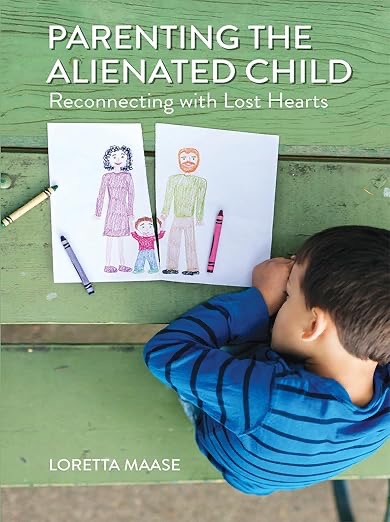
I wrote Parenting the Alienated Child: Reconnecting with Lost Hearts because I’ve seen the heartbreak up close—and the hope that emerges when parents gain the right tools.
Drawing on 25+ years as a therapist, forensic evaluator, and expert witness qualified in parental alienation assessment and treatment in 13+ states (and throughout Texas), plus specialized training with leaders like Dr. Amy Baker, Dr. Steven Miller, Linda Gottlieb, and Dr. William Bernet, this book offers evidence-based frameworks, practical strategies, and hope.
You’re the expert on your child. This book helps you translate that expertise into effective action—without blame, with dignity, and focused on your child’s future.
Order today on Thompson Publishers, Amazon, or visit lorettamaase.com for more resources.
Your child needs you to understand what’s really happening. This book shows you how.
If you’re navigating the heartbreak of child rejection and want practical, expert-led support beyond the book, explore the Healing Lost Hearts® parenting programs on my website.
These evidence-based classes and intensives—created alongside the book—offer group sessions, individual coaching, and court-ready education to help you apply the strategies in real time, stay steady under pressure, and protect your child’s long-term well-being.
See the full schedule, formats, and details here: lorettamaase.com/classes.
You’re not alone in this. The right tools and guidance can make all the difference.
About the Author
Loretta Maase, M.A., LPC, is a nationally recognized specialist in parental alienation and parent-child contact problems. With over 25 years of experience, she provides therapy, reunification support, forensic evaluations, and expert testimony. She created the Healing Lost Hearts® programs and teaches internationally.